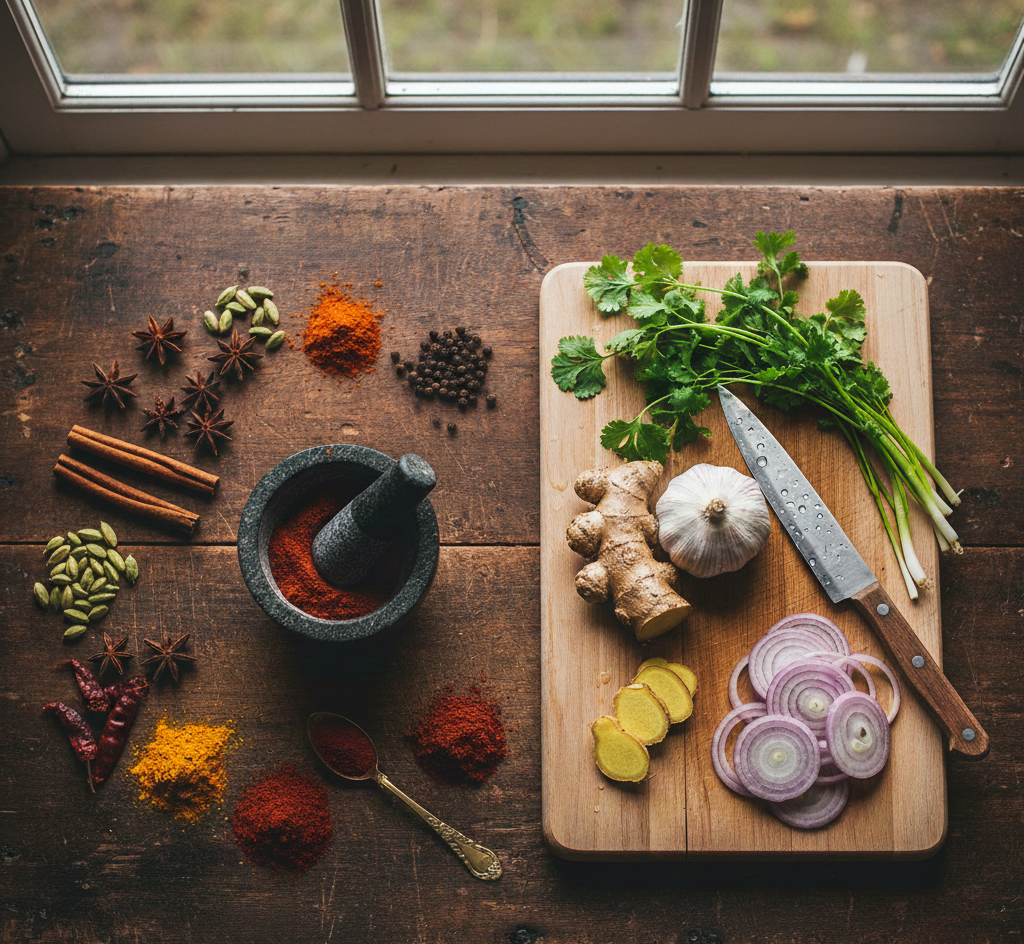
Anatomy Of A Dish
In the architecture of a great dish, ingredients are never just “added”—they are built. To master your kitchen, you must understand how to separate your Spices from your Base.
This is the invisible energy of the dish. Before the bulk of the food enters the pan, these dry ingredients—seeds, powders, and barks—define the “spirit” of what you are cooking.
The Role: They provide the mood. While the base makes you full, the Dry Soul makes you feel.
The Magic: Spices are high-intensity but moody. When they hit hot oil, they “bloom,” releasing oils that would otherwise stay locked away. Without the soul, a dish is just fuel; with it, a dish becomes a memory.
Once the soul is awakened, it needs a home. This is your foundation—the onions, garlic, ginger, and fresh herbs that provide the physical “body” of your meal.
The Role: The Fresh Base provides the structure and the “weight.” It is the stage where the spices perform. For example, the moisture from fresh tomatoes or the crunch of ginger holds the dry spices in place and gives them a platform.
The Texture: This is where the physical satisfaction lives. It is the silkiness of sautéed onions or the bite of fresh garlic that makes a dish feel complete and “fresh” rather than just seasoned.
The Union: When Soul Meets Base
A dish is born when the Dry Soul and the Fresh Base stop being two separate things:
The Unlock: The moisture and fats in the Fresh Base act as a solvent. They dissolve the concentrated flavors of the Dry Soul, spreading them evenly throughout the entire pot.
The Absorption: The aromatics act like a sponge. As your base cooks, it soaks up the character of the dry spices. This is why a simple onion can end up tasting like a complex masterpiece.
The Harmony: The freshness of the base (like the zing of ginger) cuts through the heavy, earthy notes of the dry spices (like cinnamon or cloves), creating a perfect balance.