
Understanding Coriander and Its Uses
If spices build the body of a recipe, coriander brings the final sparkle. Light, citrusy, and unmistakably fresh, coriander has the power to brighten heavy curries, soften rich gravies, and wake up simple salads with just a handful of leaves.
Coriander, scientifically known as Coriandrum sativum, is an herb widely used across Indian, Middle Eastern, Mexican, and Southeast Asian cuisines. In many places it is also called cilantro. What makes it special is that almost every part of the plant is useful, from its tender leaves to its slender stems and even its seeds.
What Is Coriander?
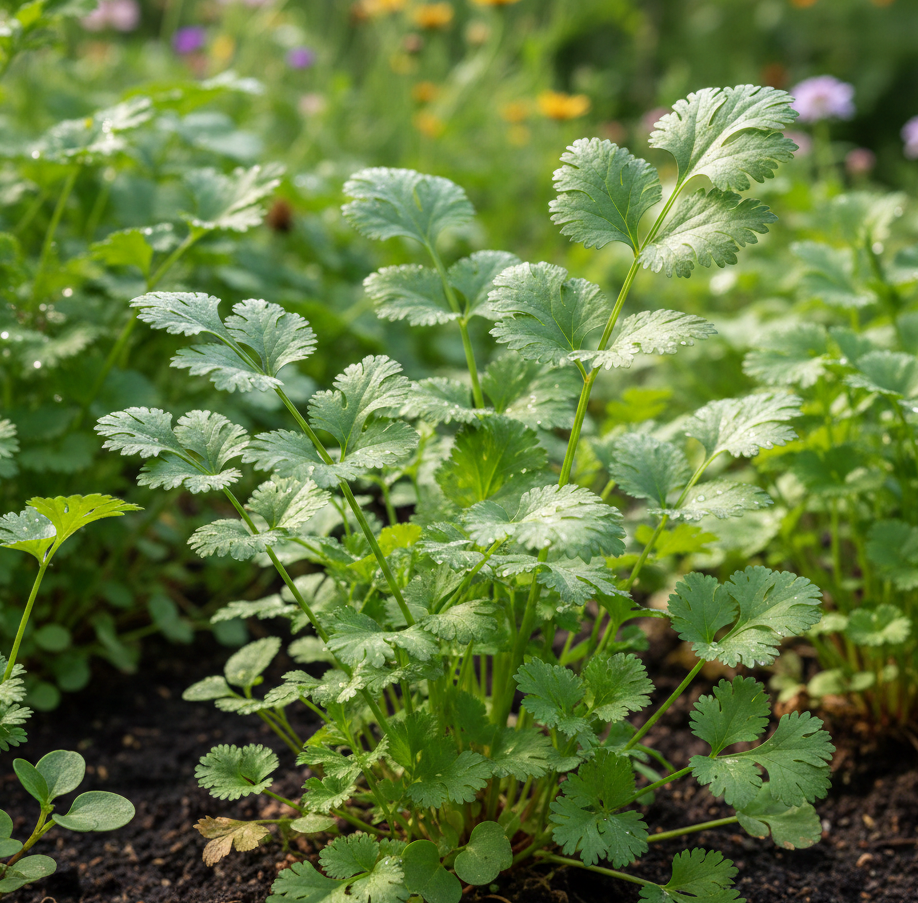
Coriander is a leafy herb with delicate, feathery green leaves and thin stems. It has a fresh, slightly citrus-like aroma with a gentle peppery undertone. Unlike heavier herbs, coriander does not dominate a dish. Instead, it lifts and refreshes it.
There are three main forms used in cooking:
Fresh leaves
Fresh stems
Coriander seeds (dried form, used as a spice)
This article focuses mainly on the fresh herb and how to use it effectively in everyday cooking.
Coriander, scientifically known as Coriandrum sativum, is an herb widely used across Indian, Middle Eastern, Mexican, and Southeast Asian cuisines. In many places it is also called cilantro. What makes it special is that almost every part of the plant is useful, from its tender leaves to its slender stems and even its seeds.
Understanding Coriander Leaves and Stems
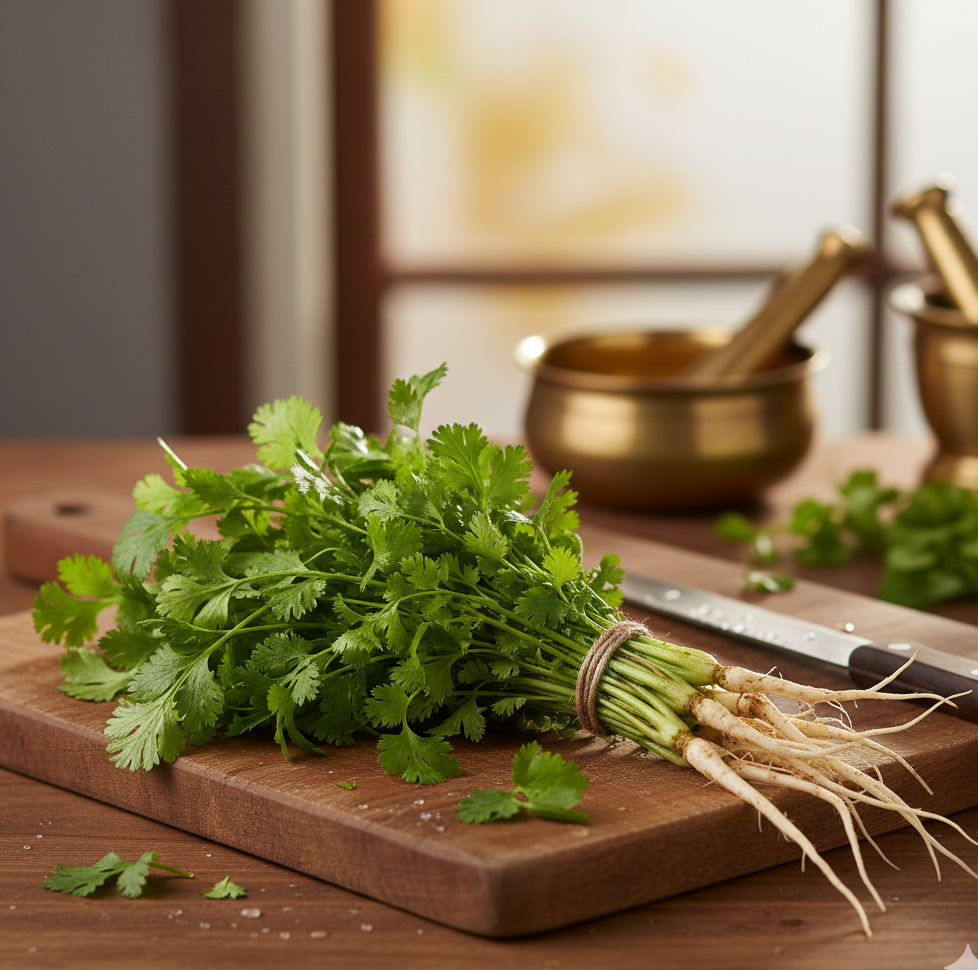
Many people use only the leaves and discard the stems. That is a missed opportunity.
The Leaves
Soft and delicate
Best used raw or added at the end
Ideal for garnishing, chutneys, salads
Leaves give a bright finish and vibrant color.
The Stems
Slightly stronger in flavor
More intense aroma than the leaves
Perfect for cooking and blending
Finely chopped stems can be added while sautéing onions and garlic. They hold up better to heat and add deeper herbal notes. In chutneys and marinades, stems provide stronger flavor and reduce waste.
Using both parts makes the dish more complete.
There are three main forms used in cooking:
Fresh leaves
Fresh stems
Coriander seeds (dried form, used as a spice)
This article focuses mainly on the fresh herb and how to use it effectively in everyday cooking.
Coriander, scientifically known as Coriandrum sativum, is an herb widely used across Indian, Middle Eastern, Mexican, and Southeast Asian cuisines. In many places it is also called cilantro. What makes it special is that almost every part of the plant is useful, from its tender leaves to its slender stems and even its seeds.
How to Use Coriander in the Kitchen?
As a Garnish
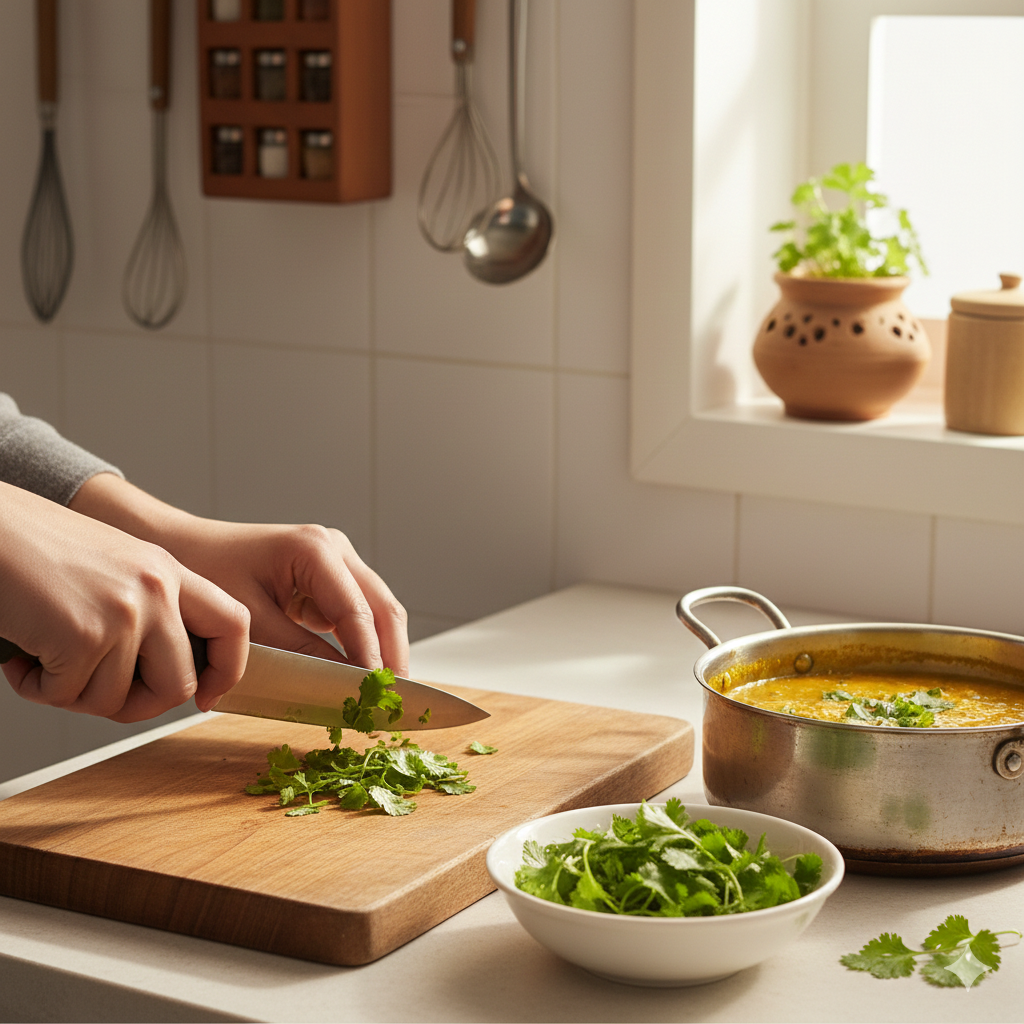
The most common use. Roughly chop leaves and sprinkle over:
Dal
Curries
Rice dishes
Soups
Chaat
It adds color and aroma instantly.
In Chutneys
Blend coriander leaves and stems with green chilies, lemon juice, salt, and a little water. This creates a vibrant chutney that pairs beautifully with snacks and meals.
In Marinades
Finely chopped coriander mixed with yogurt, garlic, ginger, and spices enhances vegetables or paneer before grilling.
In Salads
Add freshly chopped coriander to cucumber, onion, and tomato salads for brightness.
In Tempering or Base Cooking
Finely chopped stems can be sautéed with onions to create an herb-infused base.
There are three main forms used in cooking:
Fresh leaves
Fresh stems
Coriander seeds (dried form, used as a spice)
This article focuses mainly on the fresh herb and how to use it effectively in everyday cooking.
Coriander, scientifically known as Coriandrum sativum, is an herb widely used across Indian, Middle Eastern, Mexican, and Southeast Asian cuisines. In many places it is also called cilantro. What makes it special is that almost every part of the plant is useful, from its tender leaves to its slender stems and even its seeds.
Tips for Storing Coriander
When to Add Coriander
Wrap in a paper towel and store in the refrigerator.
Keep stems in a glass of water like fresh flowers and cover loosely.
Use within a few days for maximum freshness.
Timing matters.
Add during cooking if using stems.
Add after cooking if using leaves.
High heat for long periods reduces its fresh character. Treat it gently for best results.
Final Thoughts
Coriander is more than a garnish. It is a flavor enhancer, a freshness booster, and a visual delight. By using both its leaves and stems thoughtfully, you unlock deeper herbal notes and reduce waste. Whether blended into chutney, stirred into a marinade, or sprinkled over a hot curry, coriander brings balance and brightness.
And like onion and garlic, the way you chop and add coriander determines how gracefully it transforms your dish.