
Simpifying Cooking
If onion builds depth, garlic adds boldness, and green chili sparks heat, ginger brings warmth. Not heavy warmth, but a bright, aromatic glow that spreads gently through a dish. It is sharp yet refreshing, spicy yet slightly sweet, and incredibly versatile.
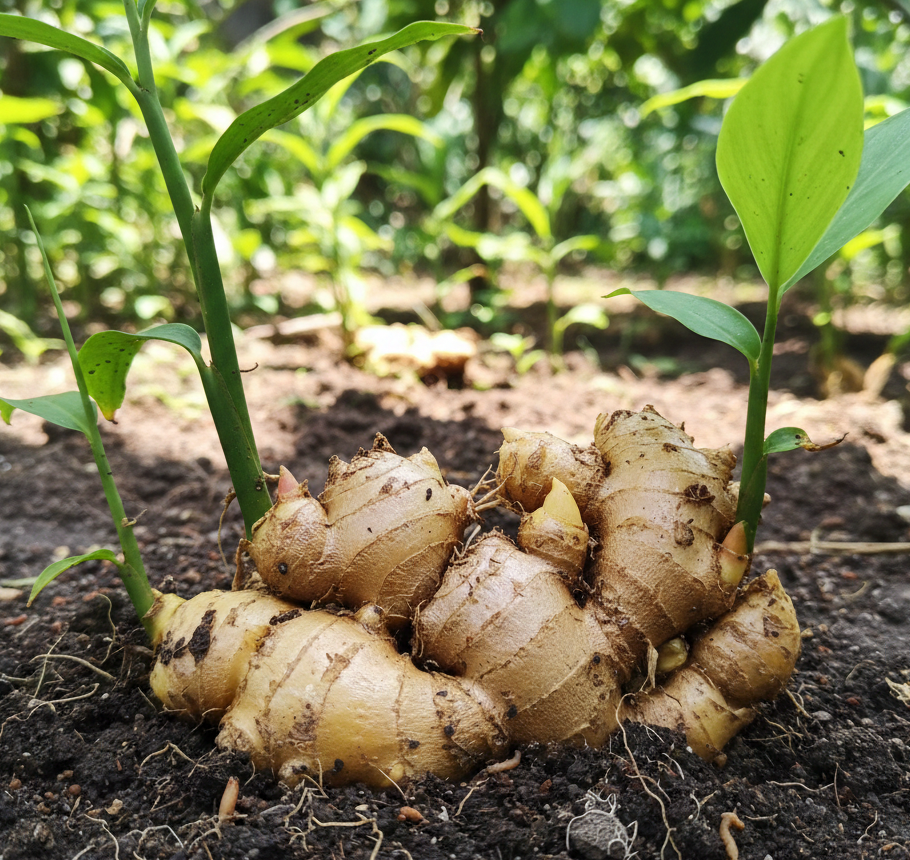
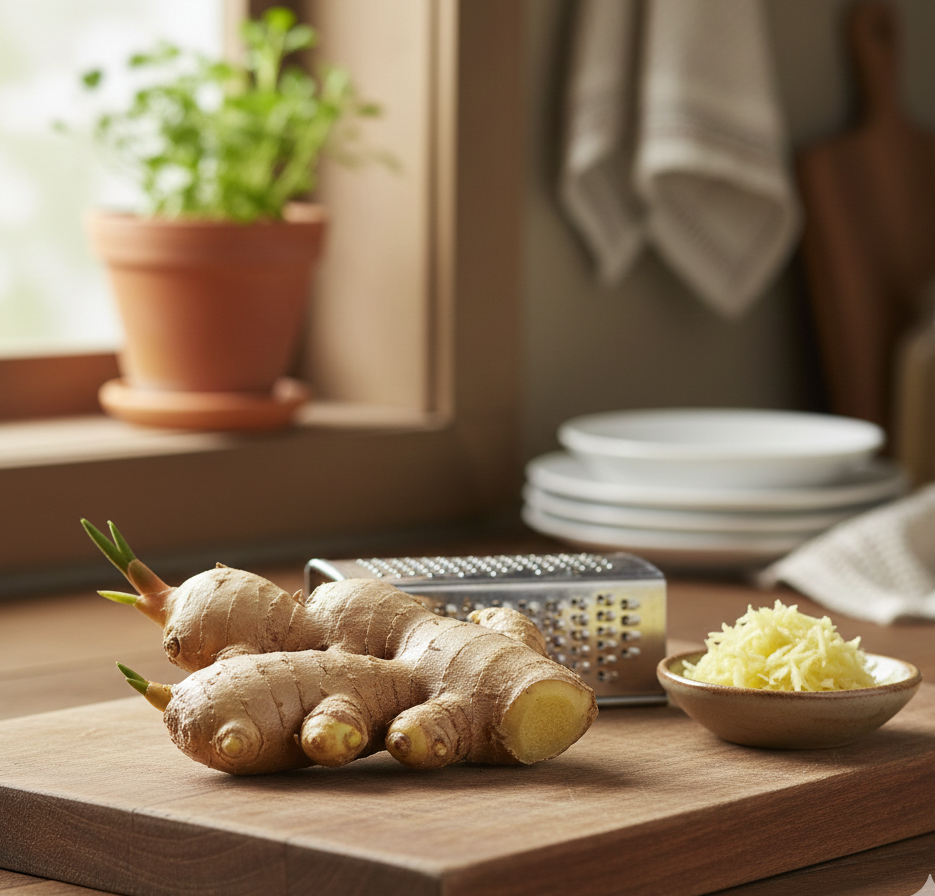
Ginger comes from the underground stem of the plant scientifically known as Zingiber officinale. Though often called a root, it is technically a rhizome. With its knotted beige skin and golden interior, ginger has been used in cooking and beverages for centuries across Asia and beyond.
Fresh ginger has:
A firm, fibrous texture
A warm, slightly sweet aroma
A peppery, citrus-like flavor
Gentle heat that lingers
Unlike chili, ginger’s heat is not fiery. It is warming and spreads slowly across the palate. It adds depth without overpowering.
When added to tea, ginger is usually:
Crushed or lightly grated
Boiled in water or milk
In tea, ginger acts as a warming infusion. Its spicy notes become softer and slightly sweet as they simmer. It blends beautifully with black tea, milk, and sugar, creating comfort in a cup.
The heat in tea feels soothing and gentle. It warms the throat and body rather than adding strong spice.
Key point: In tea, ginger is infused and extracted slowly.
In cooking, ginger is often:
Sautéed in oil
Combined with garlic
Cooked with onions as a base
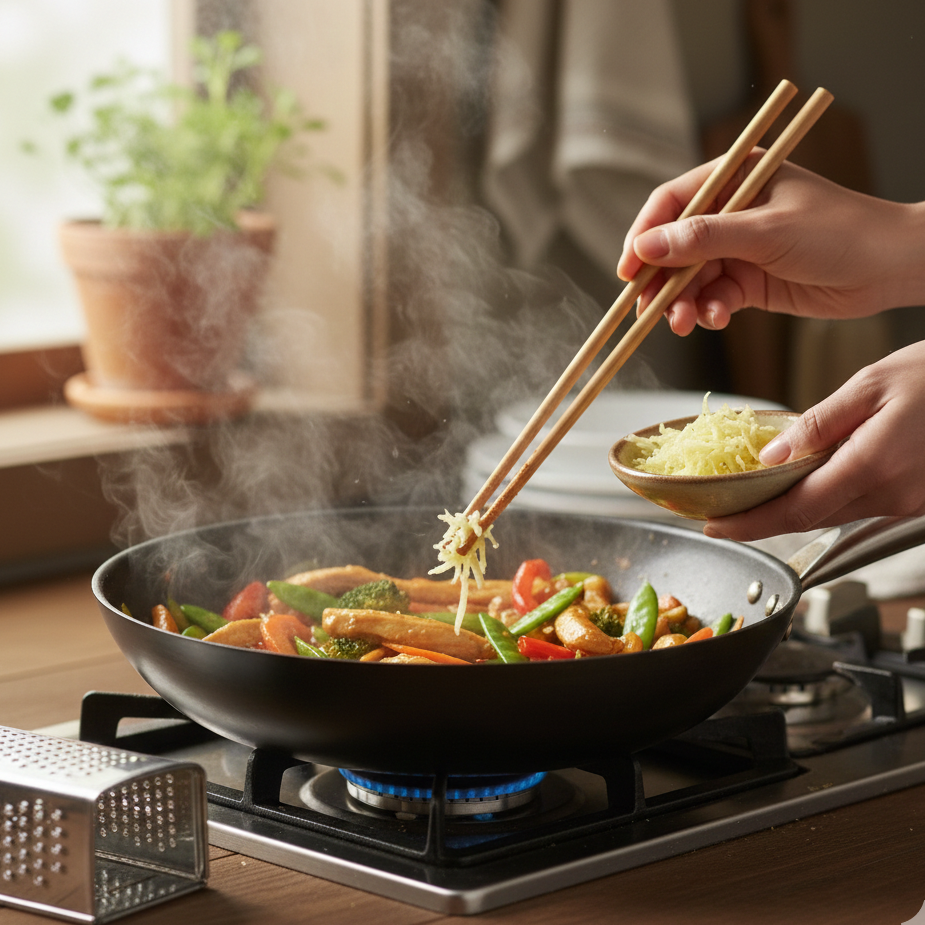
Here, ginger releases its aroma quickly in hot oil. It adds sharp warmth and complexity to curries, dals, stir fries, and marinades.
Unlike in tea, ginger in savory dishes interacts with spices like cumin, coriander, turmeric, and chili. It becomes part of a layered flavor structure.
Ginger introduces a natural heat that feels comforting rather than sharp. It is especially effective in gravies, stir fries, soups, and marinades.
When crushed or grated, ginger releases fragrant oils. The aroma is fresh, slightly lemony, and instantly recognizable.
In oily or creamy dishes, ginger cuts through heaviness. It keeps flavors bright and prevents dishes from feeling too dense.
Even in spicy curries, ginger adds a clean note that lifts the overall flavor profile.
Ginger can:
Add warmth without heavy spice
Brighten rich gravies
Enhance vegetable stir fries
Improve marinades for paneer or meat
Add freshness to soups
Without ginger, many dishes may feel flat or overly heavy. With ginger, flavors feel more dynamic and lively.
Ginger is the quiet warmth in many beloved recipes. In tea, it comforts. In curries, it energizes. In marinades, it deepens flavor. From thin slices to fine paste, the way you prepare ginger shapes how boldly it speaks in your dish.
Understanding its role in both beverages and savory cooking helps you use it with confidence. Simple yet powerful, ginger proves that warmth is one of the most essential flavors in the kitchen